
Before I begin, one thing is important: “I love you!”
When we talk about ghosting, avoidance, disappearing, alienation, and pain, it’s about seeing, hearing, and understanding. But not judging or devaluing.
Everything we do tells our story. It reveals more about us than we realize. And this is your story, or the story someone told you.

Because, like so many things that hurt, it’s usually not meant maliciously. Avoidance and ghosting come from absolute desperation. These people are in so much pain and fear that there is no room or awareness for anything else in their world. And all of this beneath a lovely surface.
But first things first.
What we see
One moment you’re best friends, and the next you’re invisible. Less than air. Being treated like that doesn’t feel good.
It can happen after a first encounter full of warmth and cordiality. It can happen after a few weeks of closeness. It can happen after years.
It can happen abruptly. It can die slowly. Or it can be that the surface remains the same, but something is missing inside.
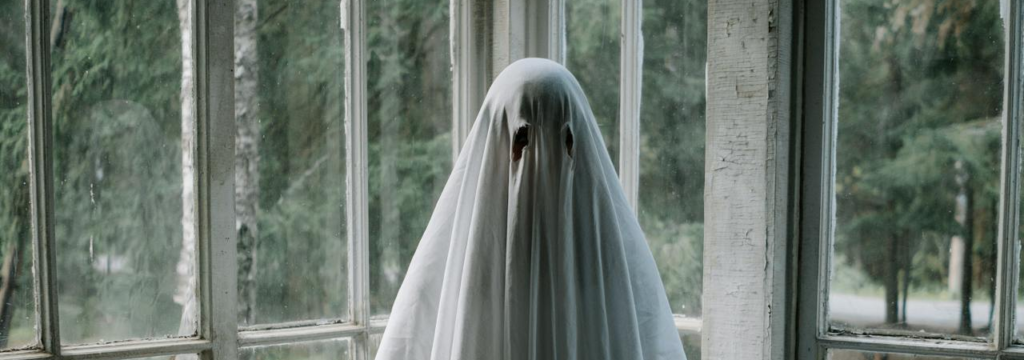
Or it could be that we start off well, but it never goes any deeper. It always stays on the surface. Comfortable and nice. Somewhere there is a wall or mask that no one can get past. Somewhere inside there is a door that is never opened.
Do you know what I mean? Do you do that?
What lies behind it:
“I want closeness… but not the kind that makes me vulnerable (defenseless).” (Pull → Fear → Brake)
“If I stay, I lose myself. If I go, I lose you.” (Double threat)
“I don’t know who I am if I’m not in control.” (Control of how I am perceived = identity)
“I want to be seen, but not seen through.” (Closeness yes – but please filtered, controlled)
“I can’t say what I feel because I can’t stand it myself.” (Risk of emotional overload)
“I can’t say what I feel because I was never allowed to.” (Internally stunted)
“If I disappear, it hurts less than if I stay and it goes wrong (you disappear).” (Ghosting as preventive self-protection)
“I’m leaving you… before you find out that I’m not enough.” (Core wound: shame + value deficit; desperate self-determination)
“Before my last spark of hope dies, you’d better die.” (There is only one anchor left, and we can’t risk it)

What’s happening?
“Those who ghost aren’t running away from you — they’re running away from what came alive in them when they were around you.”
Imagine living in darkness all the time. Permanent foggy November. That’s what your life is like all the time.
And then you meet someone. And suddenly it’s a sunny summer day inside. It’s just wow. It’s not butterflies or cockroaches in your stomach. So it’s not an escape compensation. No, just okay. Close. No stress. Secure. A warm blanket.
You get the picture, right?
So, after we’ve experienced that, we go back into the darkness. Back to perpetual foggy November. The cold fog settles around our hearts. No more warm blanket.

When we experience this crash, one thing can easily “happen”: we will avoid the sun. Because we know that the sun will never be a permanent state. Cold is our life. Cold is our reality. Everything else is only there to remind us that it does not exist for us.
“People do not fear the darkness, but the contrast
that arises when they have briefly stood in the light.”
How do people flee?
There are, of course, a variety of strategies. So what happens inside. And it can also be different on the outside.
We have ghosting and disappearing. But “princess treatment” is also avoidance. I want to destroy the balance. I am an emotional and material vacuum cleaner that tips the balance.
Money and gifts are relationship killers.
Not when we are totally devoted, but especially in the early stages. The point is that money (because gifts are usually just another form of money) is compressed time.
If we meet for three hours, it’s 50:50. Both parties invest the same amount. Everything is fine. But when money or gifts come into play, it quickly becomes 95:5. That’s not healthy. And it’s not obvious at first glance.
It’s a very practical tool for escaping relationships and intimacy. The “princess treatment” mode also makes it easy to blame the other person. “he/she didn’t appreciate me enough.” But maybe the other person just wanted to maintain the relationship?
Then we have the “last hope”: there is only a glimmer of hope left. If that were to be destroyed or disappointed, then there would be nothing left to keep me alive. So I’m not taking that risk.
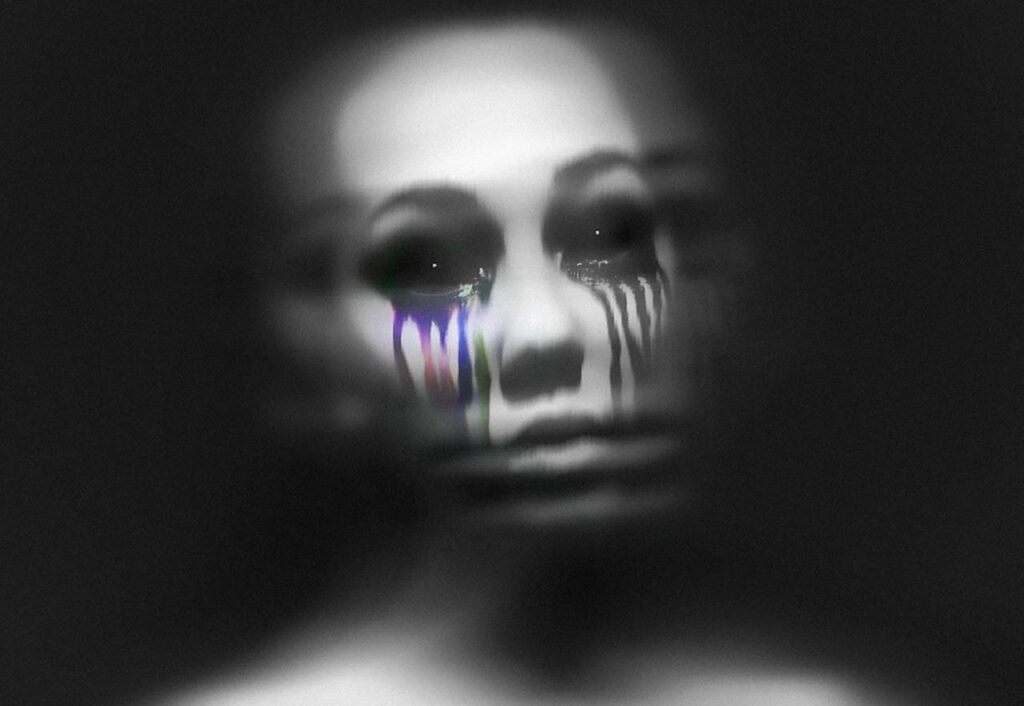
Then there’s the fear that the other person will really, truly see me for who I am (behind my masks, walls, roles, facades) and then see me exactly as I see myself: just a pile of crap. Who wants to be with a pile of crap, so I’ll be thrown away again.
And there are countless techniques for maintaining this distance. I want to control how and what is seen of me. So I only give away bits and pieces of myself. Or I distract. We find both of these together in sexualization. The concept behind sexualization is the separation of body and soul. Added to this is the deep-rooted conviction that only one part is valuable. So I sell myself for the maximum price.
Overemphasizing the body is difficult because we look at ourselves with very critical eyes all the time. Because our only value must be perfect. (Which also leads us to neglect our inner selves, which are usually in a desolate state.)
We humans are not made for mirrors (there are no mirrors in nature). We should see ourselves through the eyes of others and realize that we are never as important as we think we are.
But when we look at ourselves all the time, our ears are too big, our eyes too narrow, our nose too crooked, our skin too blemished, our hair always wrong anyway, our arms too weak, our feet too flat, our chest too small, etc. No matter how we look, we will find something we don’t like. Sometimes because someone said something stupid about it at some point. Or simply because we don’t look the way we imagine ourselves to be in our heads. Because there, we are probably supposed to be a copy of someone else.
The irony: exactly what you don’t like about yourself is what someone else will love. Maybe that’s exactly why someone will think, “Wow, you’re beautiful!”
Or I am truly convinced that I don’t deserve happiness. That’s why I deny myself it.
I am completely overwhelmed by the unknown closeness (which I am actually made for, but have never experienced). Overwhelm is fear. That puts me in Gecko mode: freeze, flight, or fight.
We shouldn’t just think about friendships or partnerships here. We have the same thing between parents and children. We can’t completely escape in these contacts, but the closeness inside isn’t there or is switched off.
And in all cases, I can’t perceive or express what’s happening inside me at all. Then there’s the “I want you to feel how I feel” on top of that.

When I feel completely alienated from myself and you did that. You reminded me that I am alienated from myself, then you should feel the same way. Because alienation is being alone, rejection.
What do we know now?
“People who disappear love you. But they don’t love themselves.”
That’s the real problem. You were closer to these people than they can be to themselves. You saw their core, their Diamond. Their identity. But because they never learned to see themselves that way, you create a discrepancy. One of you is lying: either they are wrong and they are not worthless at all, or you are lying. Either because you are stupid, or because you want to play with them and hurt them again. This “do you really believe I meant that?”.
“The closeness we have with each other is the upper limit for all other contacts. No one can be closer to us. We will prevent that. With all the means at our disposal.”
An avoidant person does not ghost other people. They ghost the perception of their own pain. It is about ensuring that their shortcomings do not become visible. (Again, as a reminder: we see this in parents too! And the children of such parents will do the same throughout their lives, unless they consciously decide to do something new.)
“I want closeness, but closeness makes me vulnerable.”
“I long for warmth, but warmth reminds me how cold I am inside.”
“I want to be seen, but please not so much that people can see inside me.”
“I’ll disappear before you realize how little I’m worth.”
“If I stay, I lose myself. If I go, I lose you.”
And I always feel like I’m not enough or too much. When I experience closeness, it awakens the hope that I might be worth something after all. This gives rise to the conflict: one part hopes (“I am valuable”) while the other part knows (“you are worthless trash”).
Ghosting is punishment for your own hope.

People ghost others because they cannot allow what this hope has triggered in them. Sometimes it is also revenge. Sometimes control. Sometimes power. But the core is the same:
I punish myself for believing that something beautiful was possible.
And I punish you for reminding me of that.
The easy solution?
We think it’s easy. Just disappear. Just ignore it. Done.
The energy it takes to ignore someone is extremely high. And as always in balance, it is a sign of your inner state, your inner hurt.
The hurt you feel when you become invisible to someone is always smaller than the inner hurt that leads to the behavior. Simply put: ghosting always feels worse than being ghosted.
So the next time you are ignored, see it as a declaration of love. It may be dysfunctional, but it is the best love the other person knows.
The profound truth
Avoidance is an inner conflict. Different parts of me want different things. I want this closeness, but at the same time there is this “I can’t,” “I mustn’t,” and “I am not.”
We see the beliefs in action in the avoidance behaviors. Underneath is the worldview: “I am the only person who is absolutely nothing. I am the person without an inner Diamond. My Diamond was never there; with me, there is only pain, dirt, and failure. And that’s why I don’t dig deep, because I know there’s nothing there.”
Everything, absolutely everything that avoidant people do—withdrawal, ghosting, irony, distance, independence, perfectionism, smooth roles—is an attempt to control vulnerability. Because we see vulnerability—the absence of walls, masks, and facades—as defenselessness. And then people will see who I really am.
Love
Love is the solution. But it is also the greatest fear. Because true love is what triggers the escape in the first place.
“I can really see you. The roles you play, the pain that paralyzes you, and the identity (the Diamond) that you are and are allowed to become.”
Love never evaluates or judges. It only sees and wishes (and hopes) for the best.

A person who is internally filled with negativity, fear, and judgment cannot imagine an encounter without judgment. That is the dilemma. That is why ending negativity and judgment is one of the most important steps toward healing. Without that, we oscillate between different coping strategies.
And now here it comes—and I know this won’t be enough to convince you—the moment you felt the closeness and warmth, that one fleeting moment that triggered all of that in you, that was the resonance of your Diamond.
The fact that you resort to ghosting or avoidance is proof that you are okay. It is proof that everything is fine with you. You just can’t see it because you still carry the lie about yourself inside you.
You still see yourself through the eyes of the people who hurt you. Probably to protect yourself.
It’s time you see yourself through loving eyes. You are a Diamond. Rejoice in that and let the world share in it.
Connection
While love is unconditional and thrives on possibility, on the possibility that you will become the best version of yourself, relationships exist in the here and now. They are the bridge between the hearts of two people.
Relationships are based on the promise and assumption that I will always turn to you. Devotion means that your needs are just as important to me as my own needs. And vice versa.
If I come from a world of disappointed intimacy, then the very thought of devotion, of contact in which I give up control, my walls, my armor, my protection, fills me with panic.
As long as we see the defenselessness, we have not yet understood our prison. That is the first change in perspective. The second is that you can understand your true strength.
Because vulnerability only means that I am so strong, so secure in my identity, in my Diamond, that I can show myself.
That’s why being unable to form relationships only means: I haven’t learned how yet! It’s not a malfunction, but a missing skill, a learnable ability that can be learned like anything else.
It doesn’t matter whether you compare it to a language or an exercise to build muscle. The important thing is that you see it as something that can be shaped. Relationship skills as “skill development.” Like all deep soft skills, these have been neglected by all of us. We always had to pretend (on the outside) that we could do everything.
But starting with internal emotional regulation, we never had role models or guidance. We were given a pacifier and food to distract us. Later, we were pressured to function. Instead of internal emotional regulation, we all escape into countless forms of external emotional regulation.
Love is the first step toward genuine relationship skills. Less substitution. Less judgment. Less escape.
More love. More truth. More closeness.
Step by step, you can do it.
Next Step
That was just the surface. If you want to dive deeper, there is also the WhitePaper.
And even more blogs that can help you: Chocolate Cookie, “Hamster wheel”, Understanding Relationship-Types, Three Deep Truths, The Hidden Deficit: Why (Almost) All of Us Are Emotional Vampires.
Leave a Reply