“As long as we pay more attention to bellies than to souls, we will continue to see humans primarily as machines.”
— Dan, OrgIQ.org
For a long time, I’ve been carrying a very simple thought. Uncomfortably simple.
As long as our systems focus first on bellies — pay, efficiency, utilization, output — we will inevitably design for machines. Biological ones, perhaps. Expensive ones. But machines nonetheless.
And that quietly caps what becomes possible.
The missing layer: Limbi
Between belly and intellect sits something we systematically ignore: the limbic system.
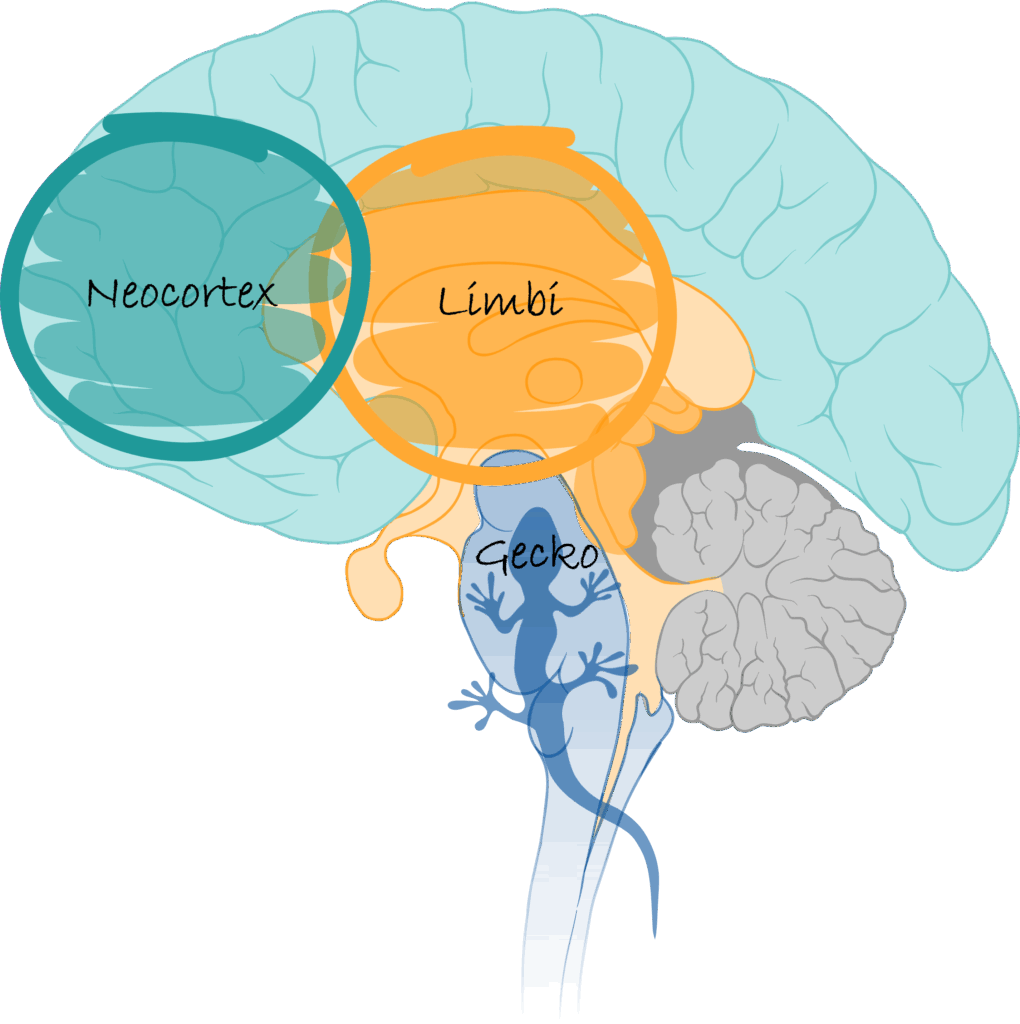
Limbi is where trust lives. Where fear and safety are regulated. Where belonging, motivation, curiosity, and meaning are decided before the neocortex ever starts reasoning.
Most organizations talk directly to the neocortex: goals, logic, strategy, KPIs, incentives.
And they talk indirectly to the belly: salary, bonuses, benefits.
Limbi? Ignored. Or worse: manipulated.
What happens when Limbi is missing
When the limbic system does not feel safe, seen, or connected, the neocortex does not become smarter. It becomes defensive.
More analysis. More control. More self-protection.
In that state, humans still function — but at a fraction of their capacity. Not because they are lazy or incapable, but because most of their energy is spent on not getting hurt.
This is why so many organizations feel busy, optimized, and strangely underpowered at the same time.
Souls are not soft — they are the multiplier
By “soul” I don’t mean anything mystical. I mean the integrated system of Limbi + Neocortex.
That is where:
- trust scales
- relationship quality improves
- collective intelligence emerges
- creativity becomes non-linear
- people act beyond self-protection
You don’t get this by optimizing bellies. You get it by designing conditions where Limbi can relax. Only then does intelligence compound. (See Relationship Quality As a Hard Economic Factor)
The real limit
As long as we see humans primarily as machines with brains attached, our organizations will never become more intelligent than that idea allows. Not because people lack potential. But because our models prevent it from showing up.
The ceiling is not human.The ceiling is the worldview we design from.

Leave a Reply