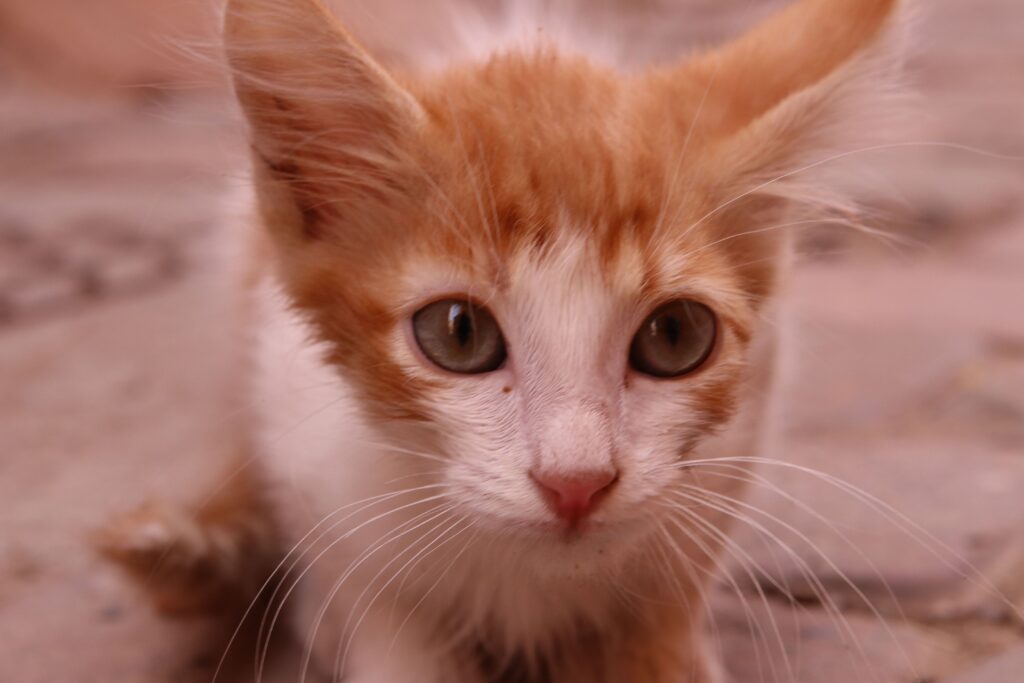
The first few parts of the series (Caution: Cat – Do Not Feed (Stray Cat Model 1), How to tell if you’re feeding them (Stray Cat Model 2), The 10 Superpowers for Connections Without Losing Yourself (Stray Cat Model 3)) were written from the perspective of dealing with “Stray Cats”. That might have given the impression that Stray Cats are a problem. But the opposite is true.
Stray Cats are my heroes.
We had already some insights into the stray cats. Which are just a cute picture for avoidant people. Avoidant are the ones that ghost you or disappear in other forms.
While we looked in first into why we shouldn’t feed them, the second part was about what we do wrong. Or can do wrong. Most of the time co-dependent people love stray cats. And while it somehow feels nice for both of them, it will just deepen the pain.
Both sides stuck into trauma cycles. And the way out of it is true (unconditional) love.
So while avoidance and especially ghosting is nothing nice, stray cats are real heroes. Heroes in despair, which is the reason they do fucked up things, but are still heroes.
They are travelers between the worlds. They are the ones that want to change their worldview. And you must be courages for that!
But if they’re the heroes, then who, exactly, is the villain?
Trauma: Our Universal Villain
We come into the world with the potential for 100% safety. While babies are still granted that, from an early age—perhaps as young as 3—we’re told we need to prepare for the real world. The serious side of life. Life isn’t a wish list, a fairy tale, or a walk in the park. So better to face disappointment early on than to dream of a perfect world. This is where the fundamental transmission of worldview between generations takes place.
Parenting goal: Best to toughen up. Then you can take a beating and survive.
This is meant kindly. It is simply the maximum amount of love (and worldview) that these parents know and can imagine.
When we talk about abuse, we’re talking about the violation of basic needs. The violation of safety is always part of it.
It’s interesting to note that only about 10% of abuse stems from physical assault (regardless of the context). The much larger 90% involves deprivation.
It’s like with food: I can either overfeed someone or starve them. In between lies self-determination. And emotional starvation is common. Not because it’s meant maliciously, but because the parents (or whoever is in that position) don’t know any better themselves.
Then there’s also overprotection or control. Parents who shield their children from everything until they’re 23. They grow up with a worldview of entitlement and princess treatment. So it’s 100% a fairy-tale world, but there’s no safety, because that protection stems from fear.
Everyone lacks a sense of safety. They start out with the potential for safety, but that potential isn’t nurtured or developed. In fact, it’s actively undermined. Parents do this with the best of intentions. Because we automatically project our worldview onto our children.
My worldview is the upper limit of what I consider possible.
This gives us a good illustration of trauma: Trauma means that danger has been brought into the area defined as safe.
Dealing with Trauma
To help us deal with uncertainty more effectively, let’s use a simple scale from 0 to 10, or from 0 to 100%.
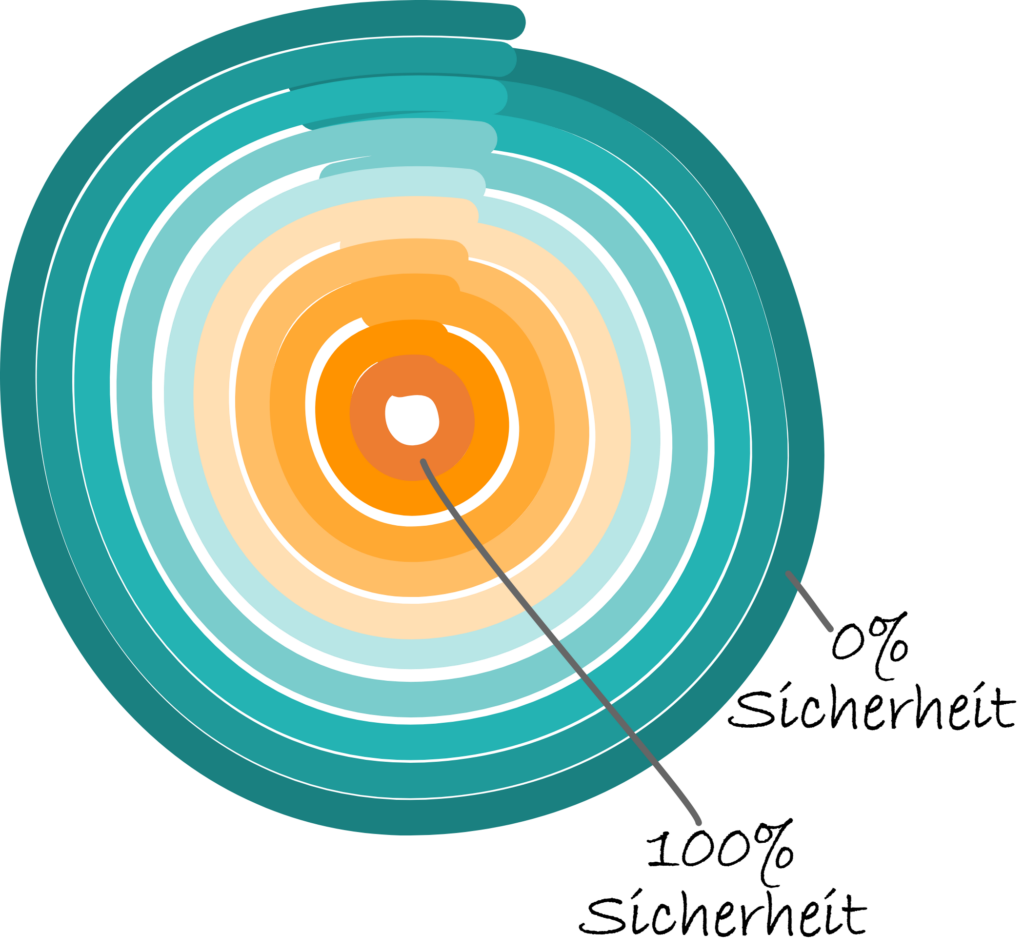
When we’re trapped in trauma, everything from 10 to 6 is gone. That doesn’t exist for me anymore. Right where I should feel safe, there’s no safety left. It doesn’t matter at all exactly how that happens—how that sense of safety is taken away and destroyed. Whether danger is actively experienced, whether insecurity is created by defense mechanisms, or whether safety is simply withheld. The result is always the same.
Coping means: feeling at ease in the face of danger (fear/pain/disappointment). It can also mean feigning security. We are at Level 3, but we act as if we were at Level 7. We cannot think our way to safety, yet we act as if we have it. Imitation. We act outwardly what is missing within. This also gives rise to the definition of culture:
Culture is the set of implicit shared tools and patterns
for dealing with emotional insecurity.
Healing means that I try to gradually regain security. When we talk about the Stray Cats (i.e., the whole avoidance theme) elsewhere, it’s about security. Some people want to remain in insecurity because they don’t believe in anything. And at that point, their toolbox for dealing with the world is already empty. (Except for “culture,” of course.)
The Unsung Heroes
But the Stray Cats are the unsung heroes. They have no safety, yet they still hold onto hope.
They don’t have any better circumstances than anyone else, yet they refuse to give up on life. They don’t want to be lost. They fight back against having their identity (“Hamster wheel”) or their diamond (3x Diamond) taken away.
So they set out on their journey. They don’t give up their resistance. That’s why they try it out. They want to increase their sense of security little by little, step by step.
“Depression is healthy behavior in an unhealthy environment.”
They build trust by carefully gathering information. Always ready to run.
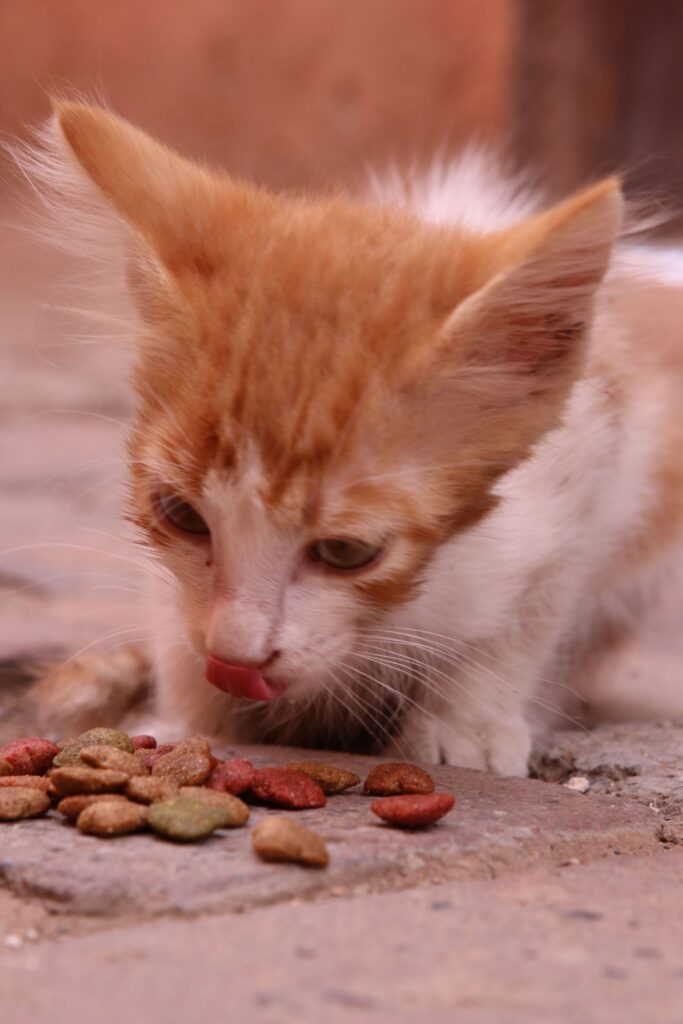
Even though they may seem ambivalent on the surface, they’re braver than (almost) everyone else. So here’s another big shout-out to all the Stray Cats!
However, keep in mind: A Stray Cat is still in “usage mode” and hasn’t yet reached a place of connection. Just because they are brave and heroic doesn’t mean they are healed.
This is absolutely crucial to understand. Their system and their focus are still solely on themselves. Everything else is judged based on its usefulness.
The significant difference is this: Usefulness is no longer just about coping, but about the hope of healing.
Challenges for Stray Cats
Why is it so hard, and why do so many stray cats stop roaming as they get older? Or put another way: Why do so many roam when they’re young, and why is it such a tragedy that we render them helpless? Because even stray cats can give up if everyone tells them, “Just wait until you’re completely resigned (i.e., grown up).” That can really sap your courage.
I’ve seen many stray cats myself who eventually lost hope and chose to just cope. Then life is quickly missed.
So what are the hurdles? Through the brain’s developmental phases, the initial worldview is formed between the ages of 7 and 10–12. That is the crucial time for our view of the world. Then we are, in a sense, adults. That is why the initiation took place at that time.
After that, between the ages of 12 and 16, we have a good opportunity for an update. During this time, we should leave the family and explore new environments. There, we can test and update our assumptions about the world. It’s all about correction and updating, not about turning the world completely upside down.
The deeper purpose is that we can bring our new perspective into society. Because every generation has a new starting point and can thus “clear out” traditions. What no longer fits can go. Likewise, we need new answers for some questions.
We still see this to some extent: As people get older, they turn more toward their peer group. But since our culture keeps us in school and family (until age 18/20+), we usually miss the great opportunity that this time brings. This missed opportunity applies to every individual, but also to society.
That’s why most Stray-Cats are on the move until their mid-twenties at most. Nothing is impossible after that, but it becomes increasingly difficult and expensive. And since our brains want to conserve energy, these actions tend to be avoided.
So what now?
Celebrate all Stray Cats as heroes.
Stop invalidating other people (their thoughts and feelings) just to give yourselves a false sense of security.
Thank you
Leave a Reply